

The Office of the Military Ombudsman joins the reform of Ukraine’s military regulations
Representatives of the Office of the Military Ombudsman took part in a roundtable discussion on democratic civilian control in the reform of the Armed Forces of Ukraine’s general military regulations.
The event was the first in a series of workshops dedicated to developing new legislation regulating military service. It was organized by the NGO Frontline Reforms and the Swedish government agency Folke Bernadotte Academy.
“Ukraine continues to strengthen democratic civilian control over the defense sector even amid the full-scale war. We must move forward and rethink the philosophy and approaches to human capital management — starting with the very foundations reflected in the military regulations. This is a difficult, unpopular, but necessary process. The key is to move forward through dialogue with the military and with a deep understanding of the realities within the armed forces,” said Olha Reshetylova, the Military Ombudsman of Ukraine.
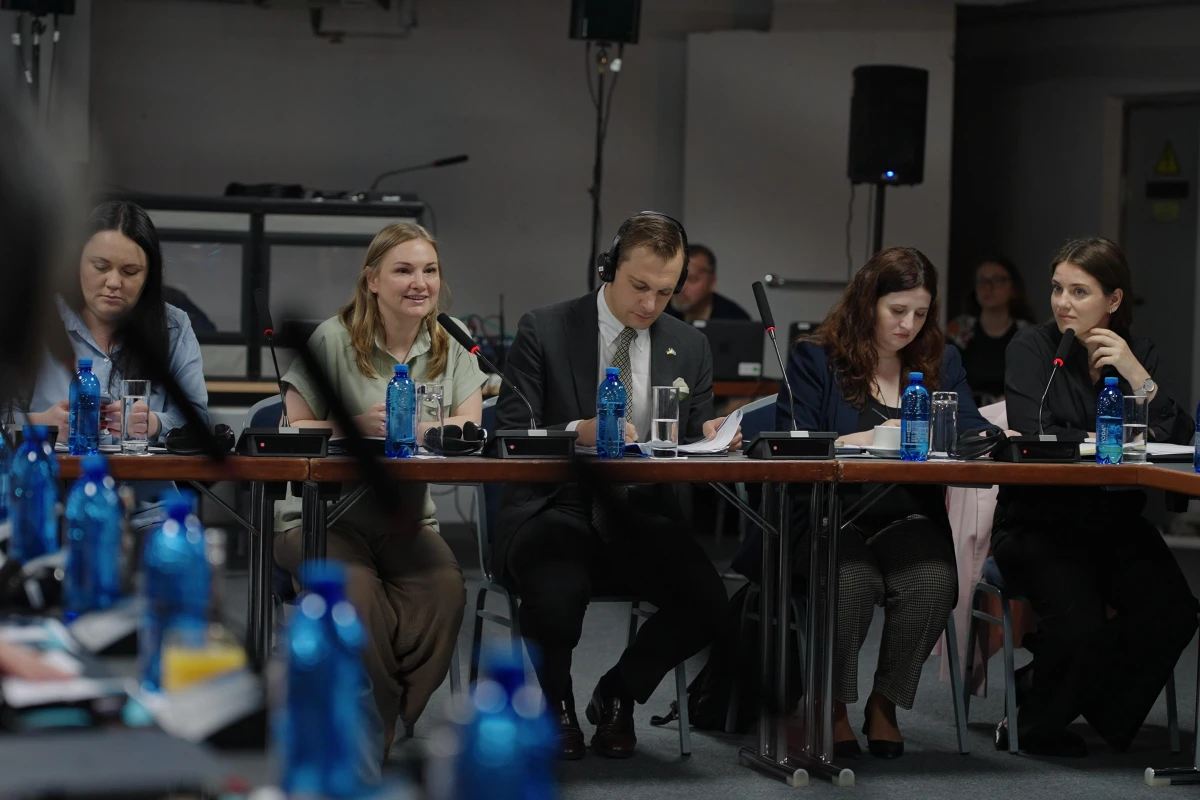
Participants also included members of the Ukrainian parliament, representatives of the Ministry of Defense, the General Staff of the Armed Forces of Ukraine and the Ground Forces Command, as well as international organizations and civil society actors, including the Pryncyp Human Rights Center and the Boryviter Military School.
The discussion on NATO countries’ experience in implementing democratic civilian oversight in the military sphere featured Laura Cleary, British expert in defense diplomacy and security sector transformation; Bruno Jockers, Security Sector Reform Adviser at the NATO Representation to Ukraine’s Defence Advisory Support Section; and Ebba Martensson, a Swedish Army officer specializing in joint doctrine development.
“Ukraine’s efficiency and innovation have largely been driven by cooperation between the institutions, civil society, and the expert community. Supporting the frontline remains a priority for international partners, but long-term security also depends on reforms that promote modern, transparent, and human-centered approaches in the defense sector,” said Per Olsson Fridh, the Director General of Folke Bernadotte Academy.
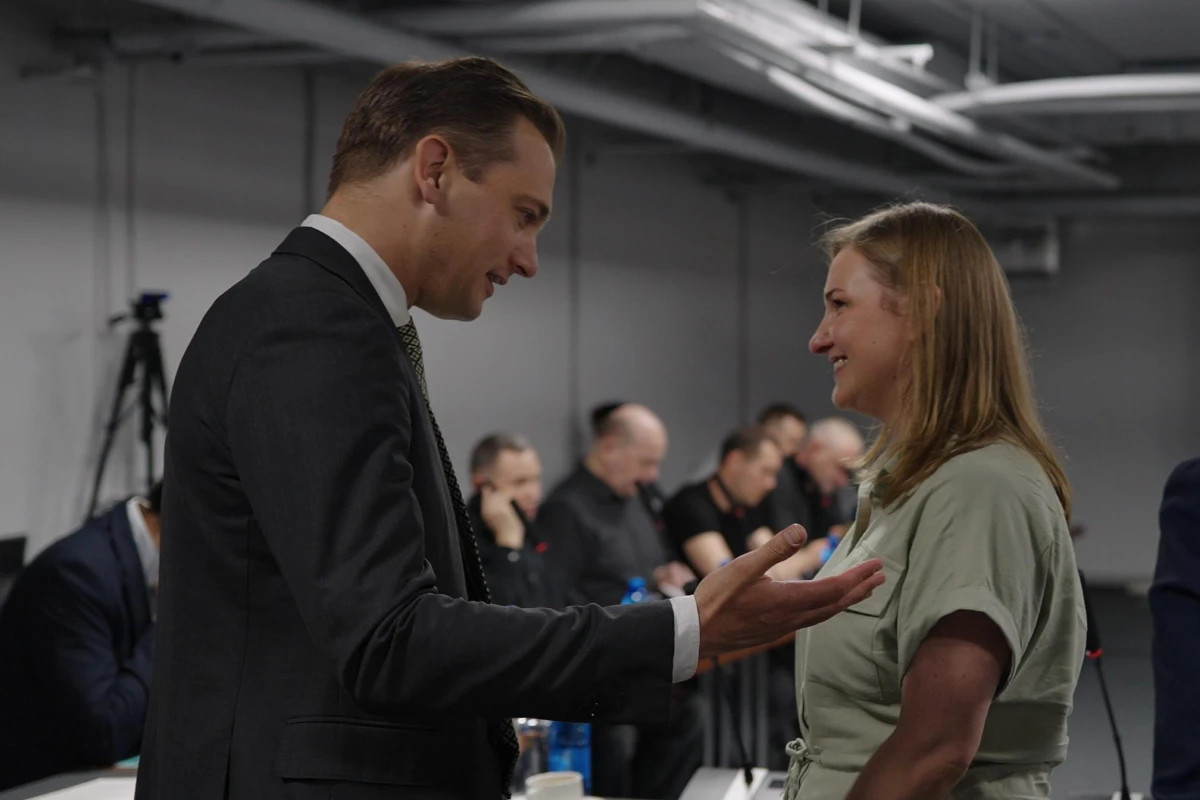
The event focused on practical approaches to integrating democratic civilian control into the Armed Forces’ general military regulations in ways that would strengthen the military, reinforce trust, and ensure fairness.
“Ukrainian military, the Ministry of Defense, and international partners do not always share the same understanding of what democratic civilian oversight means in practice. That is why we are beginning this new phase of reform with this dialogue — building a common language and aligned terminology. Democratic civilian oversight must become a cross-cutting principle of the new legislation,” noted Yuliia Marushevska, the co-founder of Frontline Reforms.
Earlier, Frontline Reforms presented the findings of the analytical study “Reforming the System of General Military Regulations: From Soviet Rigidity to Modern Functionality,” prepared jointly with the Reform Support Office of the Ministry of Defense with the support of Folke Bernadotte Academy.
The research combined legal and regulatory analysis, a comparative review of NATO and EU member states’ models, as well as in-depth interviews and focus groups with service members. Among the key issues identified were insufficient social and legal protections for service members, as provisions governing discipline, conflict resolution, and daily military routine often fail to meet modern humanitarian standards and the realities of service in wartime conditions.
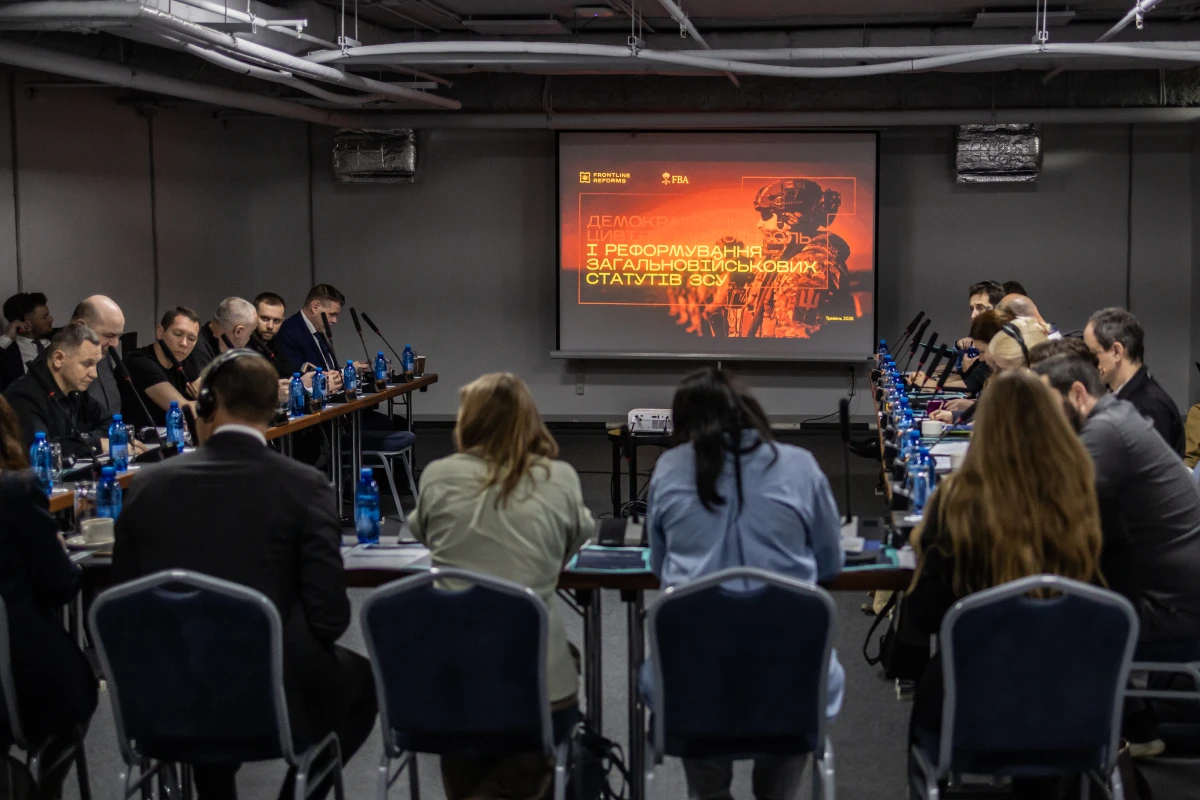
Photo: What Took You So Long / FBA