

Olha Reshetylova attends the 18th International Conference of Ombuds Institutions for the Armed Forces in Sydney
The role of military ombuds institutions in a changing geostrategic environment was the theme of the 18th International Conference of Ombuds Institutions for the Armed Forces (ICOAF), held in Sydney. The event brought together more than 100 participants from 38 countries and was organized by the Inspector-General of the Australian Defence Force and the Geneva Centre for Security Sector Governance (DCAF).
Countries are increasing their defence budgets, expanding and reorganizing their armed forces, and introducing new technologies. All these changes have a direct impact on the people serving in the military: training requirements, infrastructure, and support services are all evolving.
The role of military ombuds institutions in different countries is to understand how service members experience these changes, identify systemic problems before they escalate, and propose ways to address them. This requires analyzing complaints received and maintaining regular contact with service members through visits to military units.
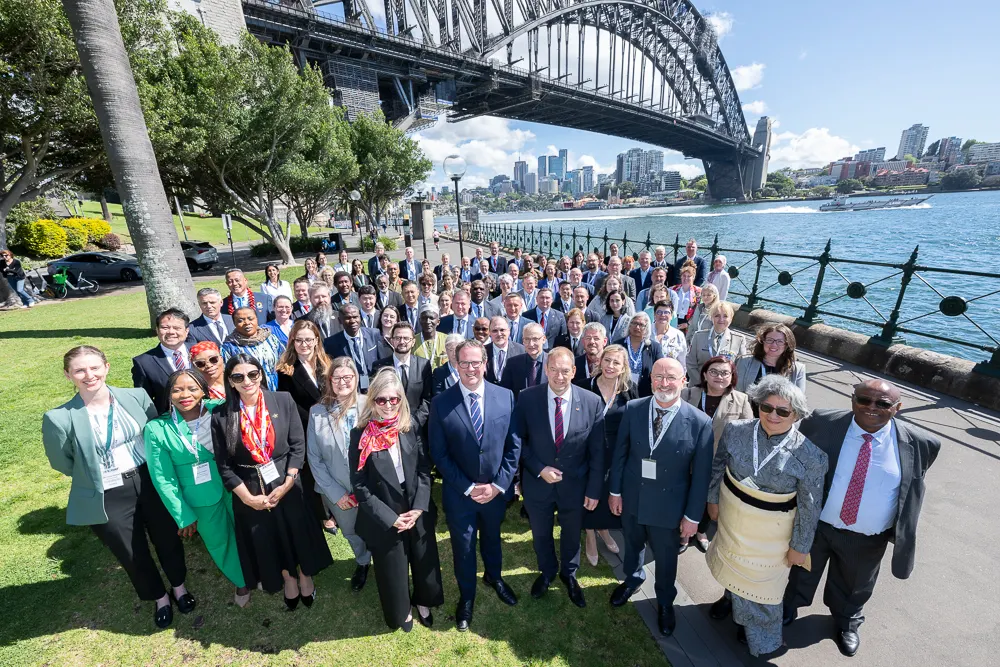
The conference covered the following topics:
- Changes in the geostrategic environment and their implications for military ombuds institutions;
- Operational readiness and the sustainability of military personnel resources;
- International humanitarian law and the role of ombuds institutions;
- International cooperation among military ombuds institutions;
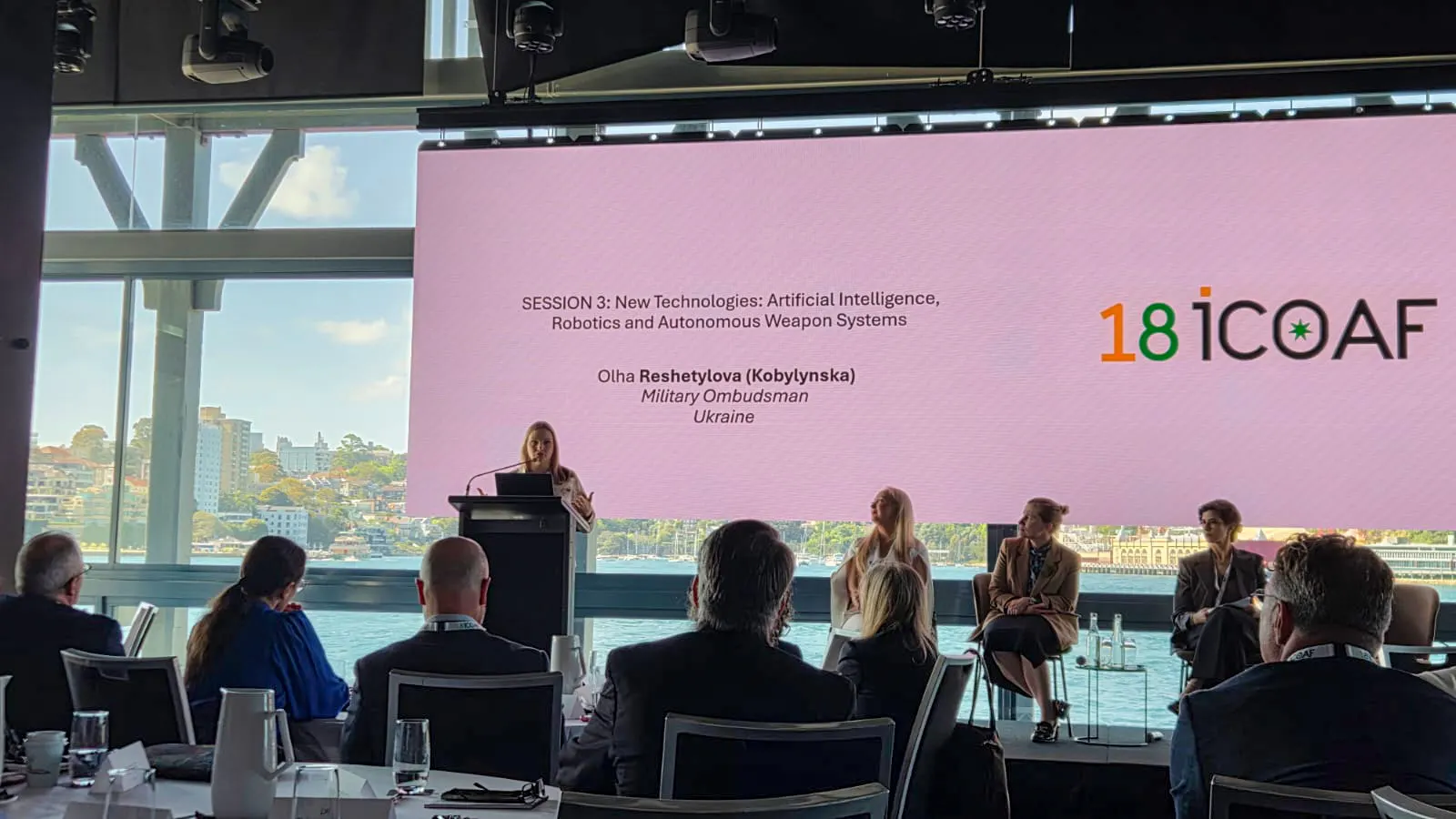
- Emerging technologies: artificial intelligence, robotics, and autonomous weapons systems.
While much of the world is concerned about the potential threats posed by artificial intelligence in the future, Ukraine is already using this technology to counter the enemy despite limited resources.
Military Ombudsman Olha Reshetylova spoke about the role of artificial intelligence and emerging technologies in protecting service members’ rights in three areas: the evacuation of wounded soldiers using unmanned ground vehicles, telemedicine in the Defence Forces, and the development of a secure AI system to process complaints at the Office of the Military Ombudsman.
“When you are at the epicentre of a modern war — a war of drones and artificial intelligence — the only chance of survival is to make technology and progress work for you. We must not be afraid of technology. We must control it and use it with respect for human dignity,” Olha Reshetylova said.
Participants concluded that new technologies do not eliminate accountability and that the well-being of service members is an integral part of a country's defence capability. Therefore, despite differences in how military ombuds institutions operate in different countries, their shared mission is to listen to service members and ensure that changes within the armed forces do not undermine their rights.